



Maybe it started with the “sweatshop-free” pitch of American Apparel. Maybe those ubiquitous yellow LIVESTRONG wristbands brought it on, or the white ONE Campaign wristbands, or the rainbow of bracelets that followed. But once Wal-Mart started stocking eco-friendly organic cotton tees, it became clear: Socially conscious fashion was more than a fad. These days, what you wear has meaning beyond looking good.
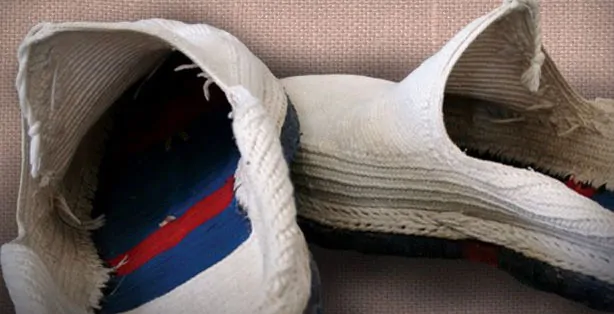
A footwear company called Buy Shoes. Save Lives. hopes to capitalize on this trend. Founded by Jeremy Courtney and Cody Fisher—Americans living in Northern Iraq—BSSL sells traditional hand-stitched Kurdish shoes called klash. The money they make from shoe sales pays for heart surgeries for Iraqi children whose parents couldn’t otherwise afford them. RELEVANT sat down with Courtney when he was last stateside to discuss the coolness of klash, the sustainability of their business model and the transforming power of loving your enemies.
First, tell me about the shoes. What are klash?
The full name is klashi kurdi. They’re made locally [in Northern Iraq] by Kurds. By one shoemaker’s account, they’ve been around since 600 B.C. Whether you believe that or not, they’re definitely legendary in this part of the world. It takes at least 35 hours to make one pair.
I’m assuming my Skechers probably didn’t take that long to make.
No way. Klash are entirely handmade—I don’t own another pair of handmade shoes, and neither do you. Most shoes in our closets are created in less than 30 minutes in a factory in China, but klash are made by families. In fact, we can introduce you by name to the people who make our shoes. I love the idea of seeing families apprenticed in this trade. It’s beautiful.
You started as a grad student at Baylor University and ended up a humanitarian worker in Northern Iraq. How did that happen?
We joined a church in Waco that placed a lot of emphasis on community, on getting involved in the lives of other people and making that a primary outlet for worship and service. The deeper we went, the more convinced we were that we didn’t want to spend the rest of our days among Americans who already understood the basic things about the Way of Jesus. We moved to Turkey to do business, but also so we could live around people for whom the Gospel—the Good News—was really something new.
So that pursuit of community was a big factor in the decision to move to Turkey?
It was the factor. Had we been left alone to do it by ourselves, I don’t think we would have ended up in Turkey, let alone Iraq. The knowledge that you’re not alone is a huge safety net when venturing out into the world.
But our businesses in Turkey never took off. Our frustration led to a lot of prayer, and we just asked God to make something good out of our mess. That’s when we got invited to get involved in projects in Iraq, and it made a lot of sense, for a number of reasons. We were better suited to do charitable work than we were to run a for-profit business in Turkey.
{sidebar id=9}
At what point did you begin to grasp the needs among the people in Iraq?
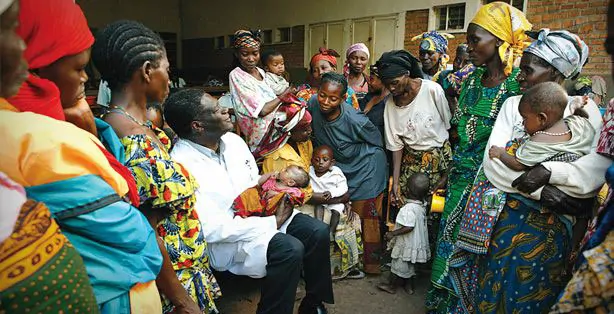
From an intellectual level—a reporting level—it only takes minutes in the country to start seeing their need. We worked with Millennium Relief & Development Services [a Houston-based network of long-term field workers and development centers]. One of the things we did there was a heart-screening program. We kept running into families with these congenital heart problems, especially kids.
For example, we just completed the funding for Aras’ surgery. Aras is a 12-year-old kid from the city of Halabja. Halabja is famous because it was the site of Saddam’s most significant 1988 gas attack, where 5,000 people died in one day and another 20,000 suffered deformations and abnormalities. We’re pretty sure that the gases used that day are linked to these heart problems, which makes Aras a human rights victim, not just a medical case.
How did you get from “These kids need heart surgery” to “Let’s sell klash to fund heart surgeries”?
It’s the idea of sustainability. We wanted to help these kids, but I was sick of begging for money from the usual financial outlets. I think others were sick of hearing me beg. I wanted to find a way to get money without asking for it—a way to generate our own funds, to help people buy in without feeling like they were being manipulated. Ultimately, it was my own fondness for these shoes that made me wonder whether other people might think they were as great as I did. So we put up a website and a six-minute documentary to see what happened. It didn’t cost a penny. When we sold almost $5,000 in three weeks we thought we were on to something! People were hungering for good news coming from Iraq.
So much of what we hear from Iraq is bad news. As an American living in Northern Iraq, do you have a different perspective?
The news makes it sound like Iraqis want Americans to go home, but that’s a little too broad a statement. Certainly, there are many Iraqis who feel this way—some Arabs, some Kurds. But I have also met both Arabs and Kurds who beg us to advocate on their behalf: “Don’t take the troops away! We need you here!”
Do you view BSSL as a ministry or a business?
A business. I read a comment today on a Facebook group related to BSSL that said we’re just a front for missionary activity, and that’s simply not true. We are a legit business that sells real products to fund real heart surgeries for real children facing very real death. Every person in the organization loves Jesus more than our own lives—otherwise, we wouldn’t live in Iraq. We point to Jesus every time people ask us why we’re doing this.
But BSSL is a business. There’s nothing fake or ulterior about what we’re doing. We just wouldn’t create a business as a front for converting people. Both Christianity and Islam have terrible, shameful, bloody histories of trying to convert others. That’s an erroneous notion of what it means to follow Jesus, I think. We believe what the Proverbs say about the king’s heart. His heart is a stream of water in the hand of the Lord and the Lord turns it wherever He will. It’s not our job.
So your goal really is to make a profit …
Yes, because if we aren’t profitable, we don’t exist. Shoes are expensive, importing and exporting is expensive, traveling to events to advocate on behalf of “the least of these” in Iraq—it all costs money. So we have to operate with sound business principles. What makes us different is that our goal isn’t to keep our profits or distribute them to shareholders. We turn our profits into heart surgeries. All of our staff are volunteers.
To be honest, I think these shoes could stand on their own in retail and make us very comfortable financially. But we’re not doing this for financial gain.
At $100 a pair, your shoes cost a lot more than TOMS shoes, to make an obvious comparison. Has price been an issue for you?
Most people have $100; it just requires a bit of shifting of priorities. In my opinion, when I’m staring an Iraqi family in the face, knowing how much anti-American sentiment they’ve heard in recent years, 20 trips to Starbucks over the next month seems far less important to me than serving a poor family in hopes that they get healed. It brings a message of peace to the region—klash are a symbol of national pride, like a flag, and when Americans wear them, we do the Kurds a great honor. What if our collective acts of love keep would-be terrorists from ever developing? Is $100 worth that?
By the way, we’re big fans of TOMS! If you don’t buy our shoes, buy some TOMS. But our shoes cost more because of the production process. TOMS shoes are mostly mass-produced in East Asian factories. Our shoes are handmade one pair at a time, by families. It’s not going to change the world, but the economic implications of what we are doing in Iraq is more direct than what
TOMS does.
There’s one more thing I wanted to ask about—the heart surgeries on these Muslim kids are actually performed by Jewish doctors. How did that happen?
It’s a pretty unique partnership. We work with a medical organization in Israel known as Shevet Achim, which means “brothers together.” The people of Shevet believe it’s beautiful for the broken children of Isaac and Ishmael to live together in peace, so everything they do is geared toward peacemaking between Israelis and Palestinians, Israelis and Iraqis, Jews
and Muslims.
In practice, they’ve sought out Jewish doctors—some of the best in the world—who are humble enough to literally “love their enemies” and serve the children of Palestinians and Iraqis. This means BSSL can fund surgeries at a fraction of the market price. So what happens is children get life-saving surgeries, governments end up working together and a bunch of politics and religious differences go out the window through the generous, loving actions of Christians and Jews working together. It’s especially dear to my heart because I think the key to peace in the Middle East lies in lives transformed by Jesus—who would be pleased if we started loving our enemies, stopped retaliating and truly allowed all “vengeance” to belong to God alone.